Twenty minutes. That is the sail from the Cannes waterfront, with its film-festival glitz and its eye-watering marina rates, to a wooded island where Cistercian monks have made wine since the Middle Ages and you can swim off your own boat in clear water. The Lerins are the best thing about cruising off Cannes, and they are absurdly close. Antibes to the islands is under five nautical miles; from the Vieux Port of Cannes it is a hop.
I anchor here several nights most seasons, and over the years the Lerins have become my benchmark for how the modern Riviera handles boats: organised, regulated, a bit less free than it used to be, and on balance better for it. Here is how to do it properly in 2026.
The two islands, and why it matters where you go
There are two islands that concern a boat. Sainte-Marguerite is the larger, wooded, with the fort where the Man in the Iron Mask was held, sitting close off Cannes. Saint-Honorat is the smaller one to the south, owned and farmed by the monastery, whose monks make and sell a serious wine. Between and around them is the anchoring water, and the channel between the two islands has a sand-and-weed bottom that holds well.
Where you go depends on the wind and on the seabed, and both vary more than the short distances suggest.
Sainte-Marguerite, southwest side: the reliable sand
The southwest coast of Sainte-Marguerite is where I go first. The bottom is sand at 3 to 6 metres, the holding is good, and you are sheltered from the north. It is also, crucially, sand rather than seagrass over much of it, which matters because anchoring on the protected posidonia is banned and enforced. I motor in slowly, read the bottom in the clear water, and drop on a pale patch.
This side fills up in season because it is the obvious choice, so I arrive early. By mid-morning on an August day the good sand is taken and the latecomers end up either over grass, which is illegal, or out in the deeper water where the holding is less certain. The reward for the early start is a calm morning on the best holding in the islands.
The Sainte-Anne mooring zone, north of Sainte-Marguerite
The north side of Sainte-Marguerite, the Anse Sainte-Anne, is now an organised mooring zone, a ZMEL. Cannes laid it out to channel boats onto fixed eco-moorings and stop anchors chewing the seabed. It covers about five hectares and takes around 28 vessels between 6 and 20 metres on buoys.
The terms are worth knowing because they are unusually generous and unusually strict at once. The buoys are free. But your stay is capped at 7 consecutive nights and 21 nights across a season, with a minimum two-night gap between stays, and you declare your arrival to the Mouré Rouge port office on VHF channel 9. So you cannot park a boat there for a fortnight, but a few nights costs nothing, which on this coast is remarkable. I take a Sainte-Anne buoy when the southwest sand is full, and I have never minded the price of free.
Saint-Honorat: the monastery side
Off Saint-Honorat the anchoring is more limited and the monastery side has its own rhythm, with the boat traffic of pilgrims and wine-buyers coming and going. The bottom around the island is a mix of sand and weed, and the same posidonia rule applies: find the sand, leave the grass. It is quieter than Sainte-Marguerite in the sense that fewer boats commit to it, but the holding is patchier and I treat it as a daytime stop rather than a confident overnight unless I have eyeballed the bottom carefully.
The reason to come is ashore. You can land, walk the monastery grounds, and buy the monks' wine and liqueur at the shop. It is the one stop in the islands that feels like a destination in itself rather than just a good place to swing the hook.
The rules, in one breath
The Lerins sit inside the Natura 2000 site for the bay and cap of Antibes and the islands, and the seagrass meadows here cover hundreds of hectares. Anchoring on posidonia is prohibited under the same Decree 123/2019 framework as the rest of the coast, with fines reaching the tens of thousands of euros for the worst cases. The full mechanics are in the posidonia anchoring ban every visitor must know, and the current legal sand and zones across the region are mapped in where Cote d'Azur anchoring is still allowed in 2026.
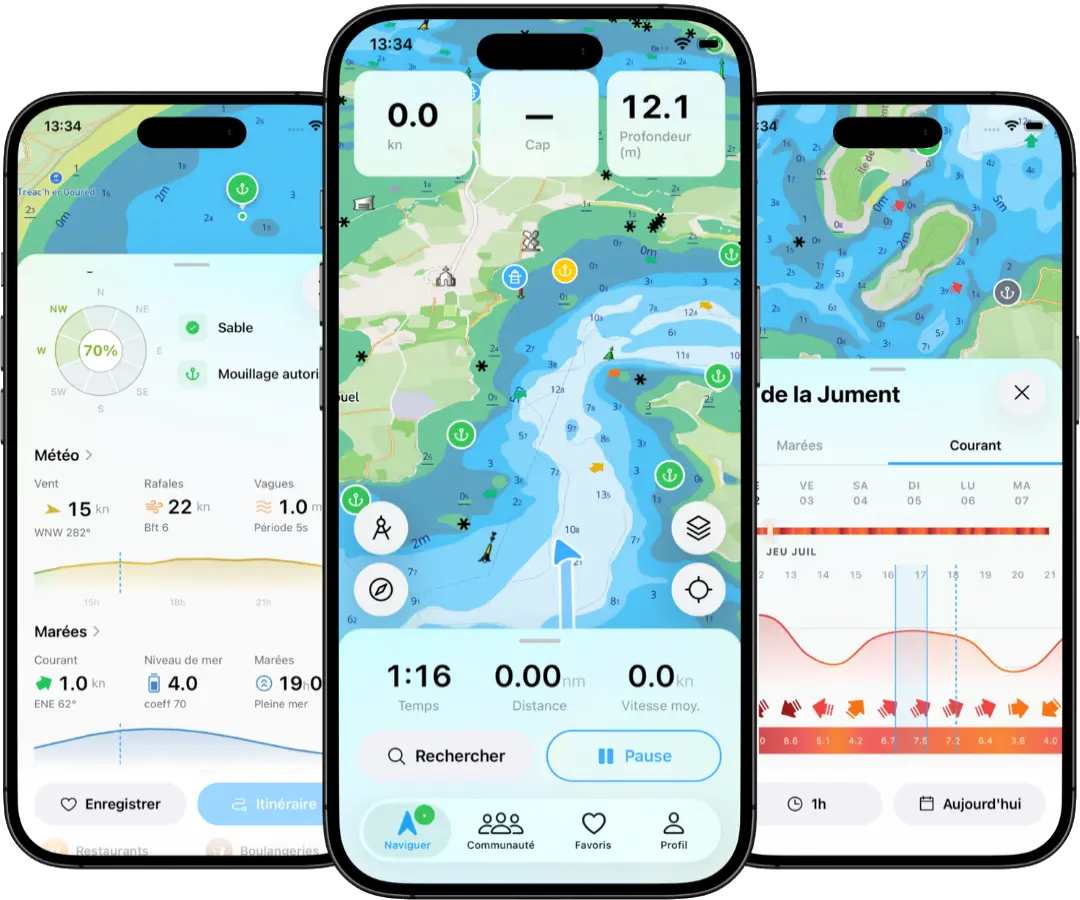
The short version for the Lerins: run the Donia app to see the grass, anchor on sand, take a Sainte-Anne buoy when one is free, and keep your speed down to a few knots inside the anchoring water. Patrols do work these islands, and the Lerins are exactly the kind of high-profile protected spot where a careless anchor gets noticed.
When the wind turns, and when to leave
The Lerins are sheltered, not bombproof. The southwest of Sainte-Marguerite is fine in the prevailing northerly and the summer sea breeze, but it is exposed to anything with south in it, and a southerly swell rolls straight into the bays. The channel between the islands gives shelter from more directions but the holding is mixed. If a real blow is forecast, the islands are not the place to ride it out; Cannes and the mainland marinas are a short retreat away, and I would rather take a berth than test the holding in a squall.
The wind I watch for here is the afternoon build. On a hot August day a sea breeze fills in from the south through the afternoon and turns the calm morning anchorage into a slop, and the combined wash of the day boats running between Cannes and the islands makes it worse. None of it is dangerous in itself, but a night of rolling is a poor reward for a good spot, which is another reason I favour the morning and the shoulder months over the August afternoons.
Getting ashore and the ferry option
Both islands are served by frequent ferries from Cannes, which matters in two ways. First, if a crew member wants a day in Cannes, the public ferry runs from a landing on each island, so you can leave the boat at anchor and send them in without launching the tender into the bay traffic. Second, the ferries themselves are part of the traffic picture: they run on a schedule, they have right of way in practice whatever the rules say, and their wash hits the anchorage. Know roughly when they pass and do not anchor across their approach.
The walking on Sainte-Marguerite is genuinely good: shaded paths through the eucalyptus and pine, the fort and its small museum, and quiet coves on the far side away from the boats. It is the rare Riviera anchorage where the island ashore is as much of a reason to come as the water.
What I do, a typical Lerins night
I leave Antibes or Cannes mid-morning, motor the few miles across, and aim for the southwest of Sainte-Marguerite before the sand fills. If it is gone, I call Sainte-Anne on channel 9 and take a buoy. Swim before lunch, while the water is still and clear. Tender ashore in the afternoon to walk Sainte-Marguerite's fort or buy wine on Saint-Honorat. Back aboard for a quiet evening once the day boats have run back to Cannes, which they do in a great noisy exodus around six.
The islands empty out in the evening in a way the mainland never does, and a Lerins night at anchor with the lights of Cannes a couple of miles off but the island dark and quiet around you is, for my money, the best cheap night on the whole Riviera. For where the islands fit in a longer route, the French Riviera sailing guide puts them in context, and from here the natural next leg is west across the Esterel to Saint-Tropez by sea.