The first time I brought my boat down here, I had it in my head that the Riviera was one long marina with a Ferrari parked on every pontoon. Some of it is. But the bit nobody tells you, until you arrive, is how short the whole coast actually is. Menton to Saint-Tropez is about 50 nautical miles in a straight line (49.8 by the plotter, if you trust the round number less than I do). You can sail the entire Cote d'Azur in a long weekend and still have time to swim.
I have spent five seasons cruising this coast on a 12-metre sloop, mostly in June and September because I cannot stomach the August prices or the August crowds. What follows is the overview I wish someone had handed me on day one: the geography, the money, the weather, and the rules that have changed enough recently to catch out anyone working from an old pilot book.
The shape of the coast in three sentences
The Riviera runs roughly east to west, from the Italian border at Menton to the Esterel and then Saint-Tropez. The eastern half (Menton, Monaco, Cap Ferrat, Nice, Antibes) is steep, deep and built up, with marinas tucked under the hills and water that drops to 30 metres a stone's throw off the rocks. The western half softens: the red porphyry of the Esterel, the Lerins islands off Cannes, then the wide Gulf of Saint-Tropez with its sandy bays.
That east-west axis matters because the prevailing summer breeze and the nastier winds both run along it. You are rarely beating dead into weather for long, but you are also rarely far from a lee shore if the wind picks up from the wrong quarter.
Distances you can actually plan around
Numbers I keep in my own notebook, measured boat to boat:
- Menton to Saint-Tropez, the full coast: roughly 50 nautical miles
- Nice to Cannes: about 16 nautical miles
- Cannes to the Gulf of Saint-Tropez: around 22 nautical miles across the Esterel
- Antibes (Port Vauban) to the Lerins islands: under 5 nautical miles
At a cruising six knots, no leg on this coast needs to be an epic. The longest open-water stretch most visitors face is Cannes to Saint-Tropez, crossing the bay below the Esterel, and even that is a comfortable half-day. I treat the Riviera as a coast of short hops with long lunches, not a passage to be ticked off.
The tide myth, and why it still trips people up
People who have only sailed the Channel or the Atlantic arrive braced for tidal gymnastics. There is almost nothing to gymnastics about. The Mediterranean tidal range here is roughly 20 to 40 centimetres, which is to say a few inches. You can ignore it for berthing and anchoring in any practical sense.
What that does not mean is that the water never moves. Atmospheric pressure and wind can shove the level up or down by more than the astronomical tide, and a strong onshore blow piles water against the coast. The real consequence of a tideless sea is subtler: there is no tidal stream to flush a harbour, no scouring current, and no convenient rising tide to lift you off if you put the keel on the sand. If you have spent years reading tide tables, the freedom feels almost suspicious. Enjoy it.
The weather that decides your week
The wind that runs this coast and ruins more plans than any other is the mistral. It funnels down the Rhone valley and out over the Gulf of Lion, and while it loses some teeth by the time it reaches the eastern Riviera, it can still deliver a hard, dry northwesterly that builds a short steep sea. It tends to be a winter and spring visitor more than a high-summer one, which is part of why June to September is the settled window most of us cruise in.
In high summer the daily rhythm is gentler: light mornings, a sea breeze that fills in from the south or southeast through the afternoon, then a calm evening. The trap is the thunderstorm. August on the Med can produce violent, fast-building cells with squalls of 40 knots out of a clear blue sky two hours earlier. I lost an afternoon and a good deal of dignity to one of these off Cap Camarat in 2023, dragging anchor in a bay that had been glass-calm at lunch. Now I check two forecasts before I commit to an exposed anchorage, every time, even for a short hop.
Where you keep the boat: marinas and the money
This is the part that makes British wallets flinch. The Riviera has some of the most expensive berthing in Europe, and the famous harbours are famous partly because they charge for the privilege.
The marquee marinas are Port Hercule in Monaco, Port Vauban in Antibes (the largest superyacht marina in Europe), and the Vieux Port in Cannes. They are spectacular and they are dear. The old port at Saint-Tropez runs 800 berths with around 100 kept for visitors, and the nightly rate for a modest 10-metre boat swings from roughly 80 euros in the outer basin to over 170 euros on the prime quay in season, with the bigger basins reserved for yachts up to 90 metres. Call ahead on VHF channel 9; the day runs from 1400 to noon the next morning.
If you want the Riviera without remortgaging, the trick is to base yourself slightly off the headline spots. The marinas around the Gulf of Saint-Tropez, the working ports west of Cannes, and the municipal harbours away from the catwalk all cost a fraction of the showpiece quays. I keep my boat well outside the postcard ports and motor in for a night when I want the scene. For a fuller breakdown of what berthing actually costs across the region, I have put the season-by-season figures in a separate piece on Cote d'Azur marina fees.
Anchoring: the rules changed, and they keep changing
Here is the single most important thing a visitor needs to absorb in 2026, because old guides will lead you astray. Anchoring over posidonia, the protected seagrass that carpets much of the seabed between about 5 and 35 metres, is now banned, and the enforcement has real teeth.
The framework is the maritime prefect's Decree 123/2019, rolled out through 17 separate prefectural decrees along the Mediterranean coast between 2020 and 2023. The headline target is vessels over 24 metres, though some local zones drop that to 20, and the penalties for damaging a protected species run to fines in the tens of thousands of euros and, in the worst cases, criminal sanction. Even on a modest boat you are expected to drop your hook on clean sand, not grass.
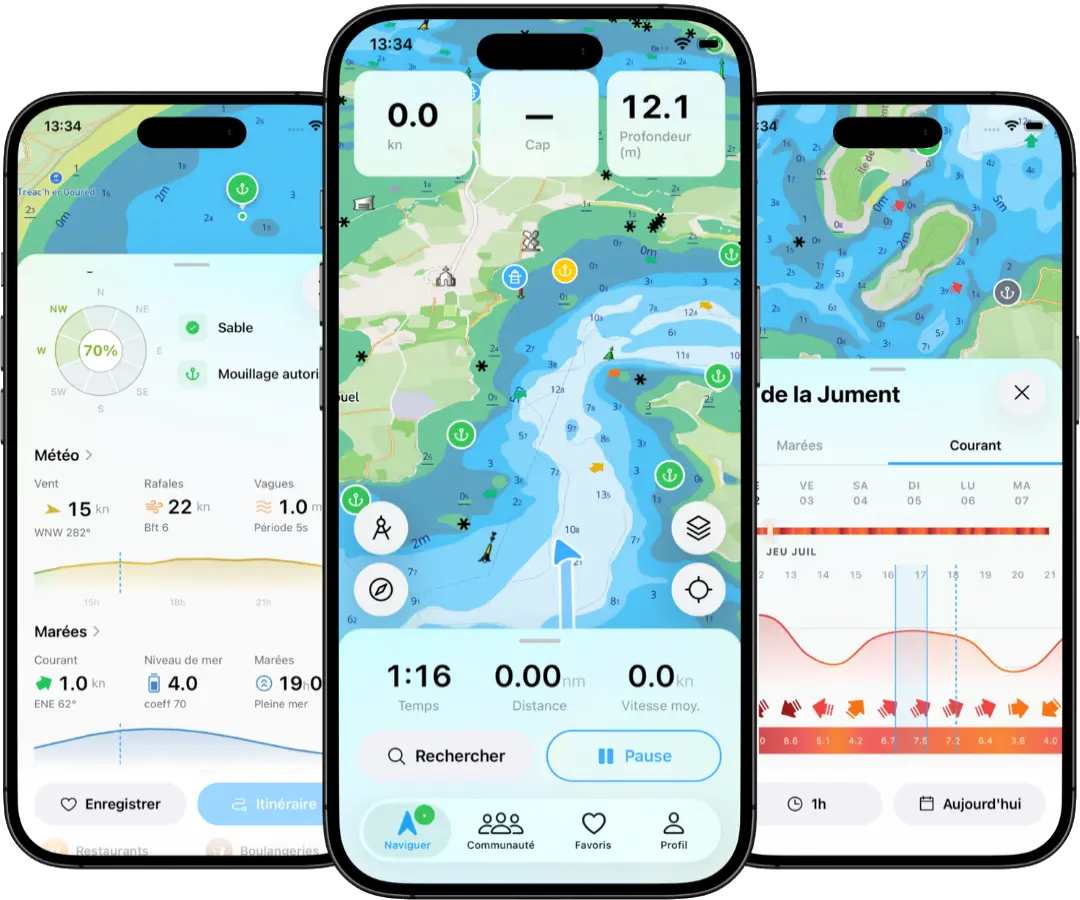
The practical answer is a free app called Donia, used by tens of thousands of Med boaters, which shows you where the seagrass is so you can pick a sand patch before the anchor goes down. I run it on the phone clipped by the wheel. I have written the detail of the posidonia anchoring ban every visitor must know, and a current map of where Cote d'Azur anchoring is still allowed in 2026, because the zones shift each season and getting it wrong is no longer a slap on the wrist.
Fuel, water and the unglamorous logistics
The Riviera is a wealthy coast, which means the services are excellent and the queues, in season, are long. Fuel berths at the popular ports can have you waiting forty minutes behind a parade of day boats on an August Saturday, so I fill up midweek or first thing in the morning. Diesel prices here track the national pump price and then some, because a marina forecourt is a captive market; I have paid noticeably more per litre at a glamorous quay than at a working harbour ten miles down the coast. If your range allows it, bunker at the less fashionable ports.
Water and shore power come with most marina nights and are metered at a few of the bigger harbours. Pump-out is patchy: the Riviera has been slow to install holding-tank facilities compared with northern Europe, and discharging a tank close inshore in a national park or a Natura 2000 zone will earn you trouble. If your boat has a holding tank, plan where you will empty it before you arrive, not after. Chandlery and repair are well covered around Antibes, which is the working heart of the yachting trade on this coast, and you can get almost anything fixed there if you are patient and your card is not.
The other logistic that catches visitors is the sheer density of traffic in July and August. The water off Cannes on a festival weekend, or the Gulf of Saint-Tropez on a Sunday afternoon, carries more boats per square mile than anywhere I have sailed. Tenders, jet skis, charter ribs and ferries criss-cross the anchorages at speed. Keep a proper lookout, hold your line, and assume the day-charter rib has not seen you. I treat the approaches to the famous bays the way I treat a busy shipping lane: heads up, predictable course, no heroics.
What it costs for a week, roughly
I keep a running tally each season, and a realistic week for a 12-metre boat in June, mixing anchorages and the odd marina night, breaks down something like this. Reckon on three or four marina nights at anywhere from 60 to over 150 euros depending on how fashionable the quay is, so call it 350 to 500 euros for berths. Add fuel: a week of short hops under engine and sail might be 100 to 200 euros depending on how much you motor. Anchoring is free, which is the whole point, though the organised mooring zones sometimes charge and sometimes do not. Provisioning ashore is no dearer than a French supermarket anywhere if you shop in town rather than at the harbour kiosk; eating out on the catwalk quays is where the real money evaporates.
The headline is simple: the Riviera is as cheap or as ruinous as you choose to make it, and the lever is how many marina nights you take in the showpiece ports. Anchor more, berth less, and a week here costs less than a fortnight in a Solent marina. Berth every night on the prime quays and you will spend more in seven days than I spend in a season.
A realistic first week
If you have a week and you have never cruised here, do not try to do the whole coast. Pick the western half. Start around the Esterel or Cannes, give yourself two nights at the Lerins islands (the most civilised anchoring close to a major town anywhere on the coast), cross to the Gulf of Saint-Tropez, work the sandy bays, and leave a day in hand for the village and the weather.
The Lerins deserve their own visit and I have written up anchoring off Cannes at the Lerins islands in full, because the regime there is a small case study in how the modern Riviera handles boats: organised mooring zones, free buoys, seagrass off-limits, and a short walk to a Cannes ferry.
What I tell first-timers
Three things, every time. Bring a Mediterranean-length warp and a sand-friendly anchor, because you will be anchoring more than you expect and over sand, not mud. Budget for fewer marina nights and more anchorages than you would in tidal waters, both for the money and because the bays are the point. And read the wind before you read the brochure. The Riviera is genuinely as good as the photographs on a settled June morning. It is also a coast that punishes complacency the afternoon a thunderhead stacks up over the Esterel.
I will revise this overview each spring as the anchoring decrees update. For now, this is the coast as I have found it: short, expensive, occasionally fierce, and worth every euro on the right week.