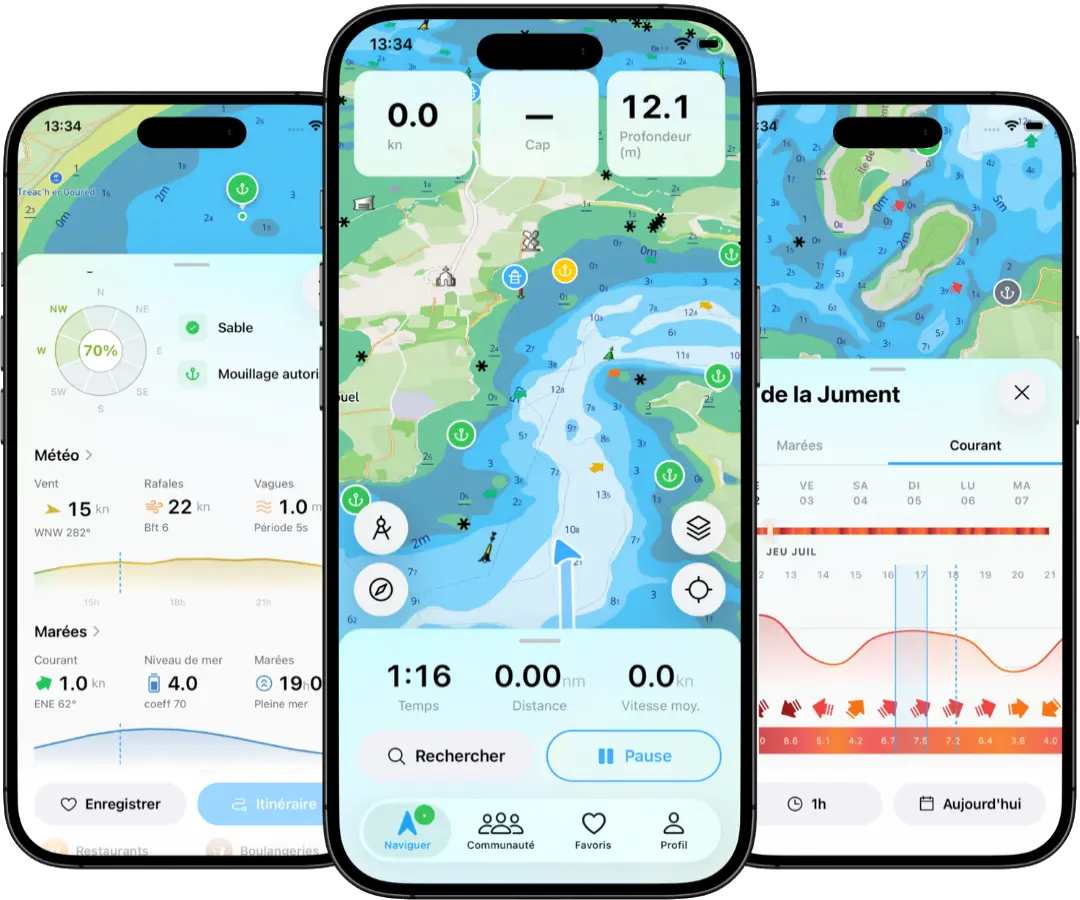
Ile de Re is the reward for getting yourself down to La Rochelle. A long, low, whitewashed island of vines and salt pans and hollyhocks growing out of cracks in the lanes, ringed by three harbours that range from genuinely lovely to absurdly pretty. It is also a place that catches out visitors who treat it like a Mediterranean island, because everything here runs on the tide and two of the three harbours lock you in and out.
I have cruised it twice from La Rochelle, once doing it properly with a few nights afloat among the harbours and once as a rushed day-sail that taught me to slow down. Here is what I wish I had known the first time.
A two-day plan that works
If you only have a long weekend out of La Rochelle, here is the rhythm I would sail. Cross from the Minimes on the morning tide and aim to reach the Saint-Martin gate around its high-water opening, take a berth inside if there is space or anchor in the roadstead if there is not, and spend the afternoon and evening ashore in the fortified town. The next morning, hire bikes and ride out to the salt pans and the western beaches, then sail the short hop round to La Flotte for the second night, timing your arrival for that gate's opening. On the third day, run back to La Rochelle on a fair tide. It is an unhurried plan built entirely around the gate windows, which is the only sensible way to plan anything here.
The boats that get this island wrong are the ones that treat it as a place to drop in whenever they fancy. The boats that get it right read the tide table first and decide where they will be when each gate opens.
Getting there and the bridge
From La Rochelle you have two ways onto the island by water. You sail round the eastern end, past the bridge, into the bay on the island's south side where Saint-Martin and La Flotte sit, or you go round the open western end towards Ars. Most visitors do the former.
The Ile de Re bridge, opened in 1988, runs nearly 3 kilometres from the mainland to the island. Its central spans are arched up to a clearance of about 30 metres above chart datum, a height the French Navy reportedly insisted on so warships could pass. For a normal cruising yacht with a mast of 15 to 20 metres there is comfortable room, but remember that the 30 metres is measured to chart datum, so on a big spring tide with a high coefficient the real clearance under the bridge can be several metres less. If you carry a tall rig, do the sum against the tide table rather than assuming.
Saint-Martin-de-Re
Saint-Martin is the main harbour and the one everybody wants. It is a fortified town, its star-shaped Vauban ramparts now a UNESCO site, with a circular inner basin ringed by restaurants and chandlery and crêperies, masts packed in tight against the old stone quays. It is one of the prettiest harbours on the French Atlantic coast and it knows it.
The inner basin is tidally gated. The gate opens for a window either side of high water, and how long it stays open depends on the tidal coefficient, so a big spring tide gives you a longer window than a neap. In July and August the basin fills by the middle of the morning, so if you want a berth inside, plan to be at the gate early rather than turning up at lunchtime expecting space.
If the basin is full, and it often is, you do not have to give up on Saint-Martin. You can anchor out in the roadstead off the town, on sand with good holding, and take the dinghy ashore. The anchorage is free, the view of the ramparts is better from the water than from the quay, and on a settled summer night it is the best berth on the island. Just watch the swing room and the depth as the tide drops, because it goes a long way out here.
La Flotte
A couple of miles east of Saint-Martin, La Flotte is the harbour I would actually pick. It is listed among the official "most beautiful villages of France" and it earns the title: a smaller, quieter, working harbour with a medieval covered market and about 100 visitor berths in a tidally gated basin. It has less of the day-tripper crush than Saint-Martin and the same whitewashed charm. The gate works on the same principle, opening around high water, so the same tidal discipline applies. If Saint-Martin is full, La Flotte is not a consolation prize, it is the better stop.
Ars-en-Re
Ars is the third harbour, tucked at the head of the Fier d'Ars, the shallow tidal inlet on the island's western side. It is famous for its black-and-white church spire, which doubles as a leading mark, and it is the most low-key of the three. Access is genuinely tidal and the approach across the Fier dries and shifts, so you want a rising tide, local knowledge or a good large-scale chart, and the patience to do it slowly. The reward is a harbour with almost none of the bustle of the south coast and a village that feels properly lived in. It rewards shallow-draught boats and people in no hurry.
Ashore: what to actually do
The thing that makes Ile de Re different from a harbour-hopping list is that the island is built for going ashore. It is flat, it is laced with more than 100 kilometres of cycle paths, and the standard way to see it is by bike. Most of the harbour towns hire bikes by the day, and an afternoon pedalling between the salt pans and the vineyards is the right way to use a layover while you wait for the next gate window. The salt marshes on the western half of the island are still worked by hand, and you can buy fleur de sel straight from the producers, which packs better in a boat than most souvenirs.
The island is also oyster and seafood country, with the Pertuis producing the oysters and the harbour quays at Saint-Martin and La Flotte serving them within sight of where they were grown. La Flotte's medieval covered market is worth timing a meal around. None of this is dramatic, and that is the point: Ile de Re is a place for slow days, and a boat is the most pleasant way to arrive for them.
Timing the day
The thing to internalise about Ile de Re is that the tide runs your whole visit. The gated harbours only let you in and out around high water, the anchorages dry or shoal at low water, and the currents in the bay between the island and the mainland are not trivial. Plan your hops between harbours around the high-water windows, not around when you fancy moving. A morning arrival at the Saint-Martin gate, a lunch ashore, an afternoon sail round to La Flotte for the night, that kind of rhythm works. Fighting the tide does not.
This island is the natural day-cruise out of La Rochelle, and most people base themselves there and come over for the day. If that is your plan, the La Rochelle visitor guide covers the marina and the approach you will be coming from. South of here the cruising gets more demanding, where the Ile d'Oleron and the Pertuis introduce serious tidal gates of their own, and anyone working the whole coast as part of a longer passage will want the wider Bay of Biscay small-boat strategy for the big-picture planning. But for a couple of easy, beautiful days afloat, Ile de Re is hard to beat.